Palm Oil Long-Term Price Predictions: Its Past, Present, and Future in Feeding the World
28/07/2026
Carbon Farming
28/07/2026Palm Oil Reimagined: Trust, Technology, and Transformation at RSPO RT2025
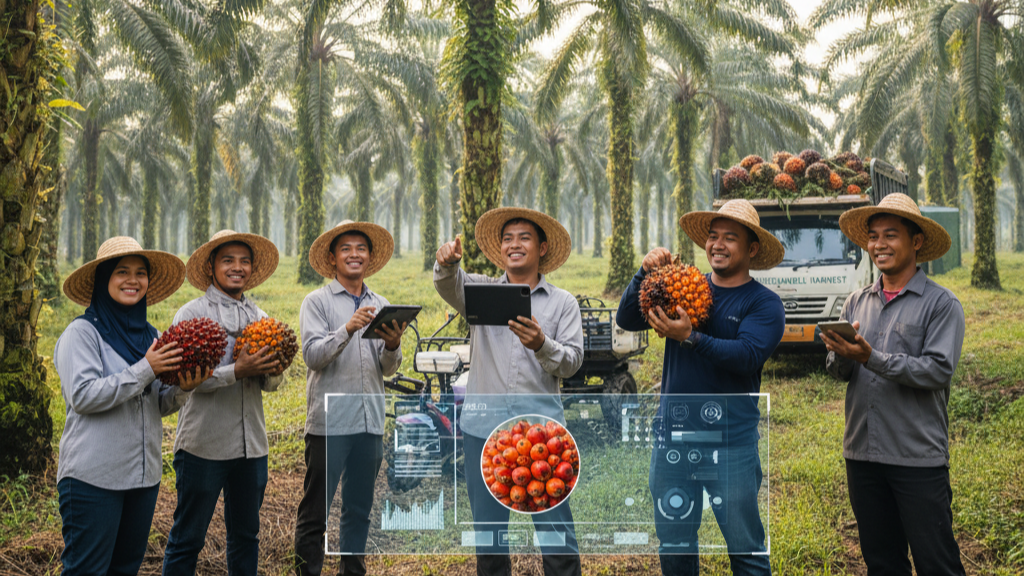
The Roundtable on Sustainable Palm Oil (RSPO) RT2025 convened in Kuala Lumpur this year, brought together global leaders, scientists, industry innovators, and smallholder advocates under a shared vision to transform palm oil from a commodity under scrutiny into a model of global sustainability, resilience, and inclusion.
Across three days of engaging sessions and candid exchanges, the recurring themes of trust, technology, and transformation resonated through every keynote and panel. This year’s roundtable was not merely a forum for ideas; it felt like a pivot point for a maturing industry ready to embrace responsibility and innovation in equal measure.
Building Trust: Turning Criticism into Catalyst
In an impassioned address that drew both applause and reflection, Datuk Mohd Helmi Othman Basha, CEO of Sime Darby Plantation (SD Guthrie), delivered a speech that set the tone for the event: forthright, hopeful, and grounded in realism.
“Technology has transformed palm oil from a controversial crop into a resilient global one,” Helmi said, underscoring how research and innovation have rewritten palm oil’s sustainability story. Yet he cautioned, the sector’s progress hinges not only on data but also on trust — trust among consumers, critics, and producers.
He highlighted an uncomfortable truth: relentless negativity continues to cloud the industry despite Malaysia’s impressive environmental data, with annual forest loss reduced by 65% over the past decade. Helmi also turned attention toward the European Union Deforestation Regulation (EUDR), warning that its implementation risks pushing smallholders further to the margins. The hypocrisy, as he framed it, lies in the expectation that developing countries bear the cost of forest preservation without equitable compensation mechanisms.
Helmi’s call was simple yet profound: “We must pay for forests if we truly want to save them.” He urged industry players to speak up when something goes wrong but also to stand firm when things go right, reframing palm oil from pariah to partner in global sustainability.
Science to Scale: Dr. Ravigadevi’s Challenge
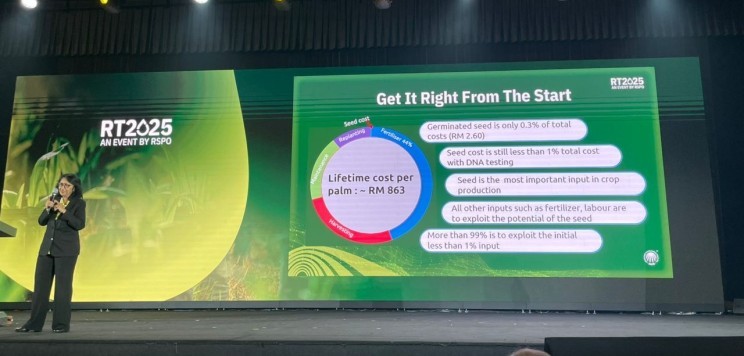
Taking the stage next, Dr. Ravigadevi Sambanthamurthi, an eminent scientist and thought leader in palm oil biotechnology, captivated the audience with her keynote, “Can the Palm Oil Industry Close the Gap Between Technology and Action?”
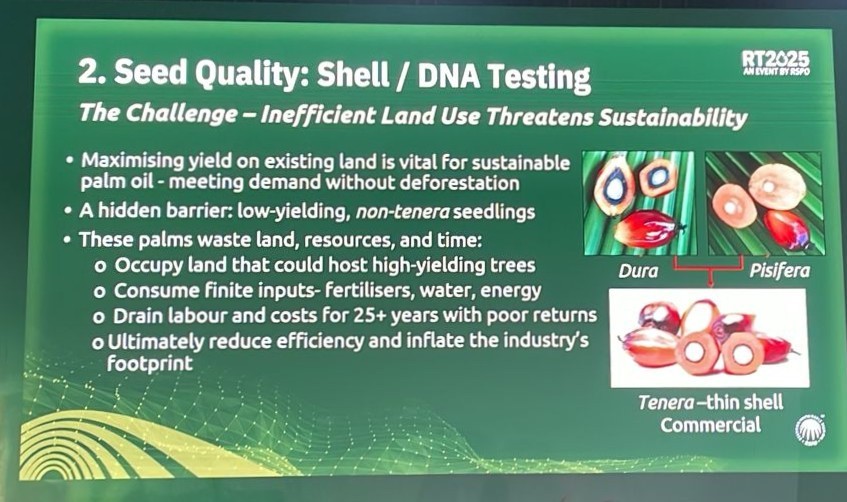
Her message was clear: innovation is not the bottleneck; implementation is. From breakthroughs in DNA testing for seed quality to advances in biomass utilisation within a circular economy, the science already exists to make palm oil sustainable. What remains is scaling, standardising, and integrating these technologies across the fragmented layers of the industry.
A key technical issue she highlighted was the presence of 3-MCPD esters, contaminants formed during high-temperature refining. Addressing such challenges requires the RSPO not only to certify sustainability, but to evolve into what she provocatively called the “DNA certification” of the industry, ensuring quality and integrity from seed to sale.
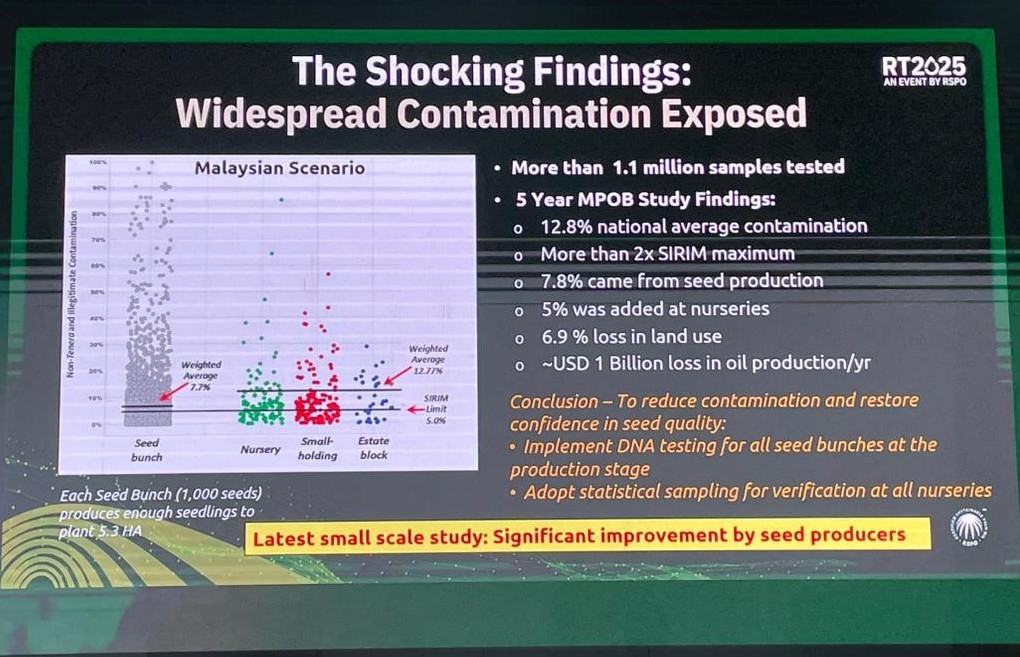
She broke down production costs to reveal that seed quality management represents just 1% of plantation cost, yet determines long-term yields and profitability. Fertilisers account for 44%, harvesting 25%, upkeep 20%, and replanting 10%. Her conclusion: mindset, not money, is the main barrier. “We work in silos,” she said, “but sustainability demands scale, collaboration, and shared ownership.”
Transformation Through Collective Action: Insights from RSPO CEO Joseph D’Cruz
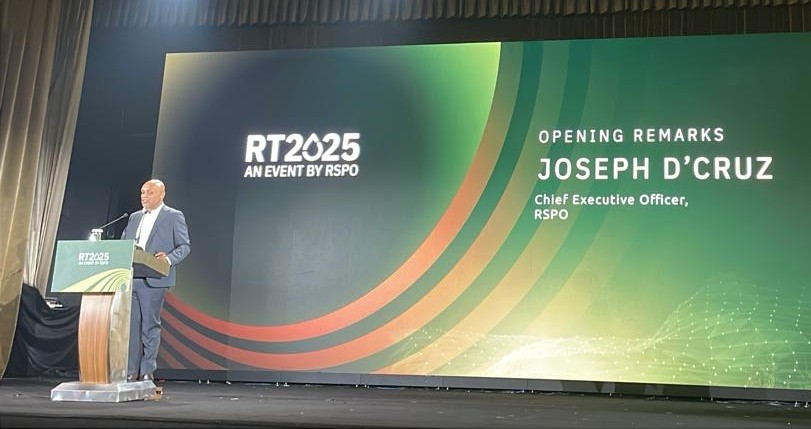
RSPO Chief Executive Officer Joseph D’Cruz opened the conference with a call for deepening partnerships and amplifying impact. His remarks struck a chord with delegates navigating the intersection of evolving global standards and local realities.
D’Cruz reaffirmed that smallholders remain the backbone of sustainable palm oil and that RSPO’s new data PRISMA system and digital innovation initiatives aim to deliver greater transparency, efficiency, and “value-for-money services” to members. He also announced RSPO’s plan to appoint a Chief Innovation Officer, a structural step towards embedding technology and creativity into the organisation’s core.
“Through collective effort,” he said, “we can drive innovation, empower smallholders, and unlock the full potential of our systems and partnerships.”
The organisation’s focus is expanding, from certification to empowerment, with growing adoption of RSPO Independent Smallholder (ISH) credits that enable traceable, premium-linked compensation for farmers.
Mainstage Spotlight: Rethinking Incentives for Traceability
The first mainstage session, “Rethinking Incentives, The Missing Link in Traceable and Inclusive Markets,” moderated by Professor Kimberly Carlson, explored one of the most pressing questions in global agri-trade: how can smallholders thrive amid tightening regulations like the EUDR?
The panel — featuring Ben Fargher (Cargill), Bilge Daldeniz (Proforest), Nadine Stueber (Nestlé), and Liza Murphy, identified the documentation gap, market access inequality, and lack of financing as structural barriers to inclusion. All agreed that transparency is not enough if the system doesn’t reward participation.
Professor Carlson closed with a line that captured the day’s essence: “Deforestation-free supply chains will only work if they also become poverty-free supply chains.”
Focus Forum 2: Resilient Trade and Digital Inclusion
Resilient Palm Oil Trade Through Producer–Consumer Partnerships
Moderated by Professor Jin Sun, this discussion connected voices from both producer nations and global markets. The panel — Kok Peng Ku (KLK Berhad), Nakul Rastogi (Pacific Inter-Link), Erin Sweeney (PepsiCo), and Dr. Bhavna Shah (IVPA), underscored that trust and transparency across borders are now trade essentials.
Their proposed pathway: deeper bilateral collaboration, mutual recognition of certification systems, and targeted support mechanisms that align ESG commitments between producing and consuming regions.
Inclusive by Design: Agriculture 4.0 and Digital Farmers
Moderated by Girish Mavath Ramachandran (IRGA Digital | Advisory), this forward-looking panel explored how Artificial Intelligence, data platforms, and geo-traceability systems are redefining smallholder participation. Panelists Fanny Butler (Koltiva), Aadarsh Mohandas (Preferred by Nature), Maria Goretti Esquivel (Solidaridad Network), and Yutthana Charungkan (PhangNga Oil Palm Production Community Enterprise) shared case studies illustrating digital transformation in remote regions.
Their shared insight: digitalisation will empower smallholders only when it’s inclusive by design, accessible in local languages, affordable to adopt, and sensitive to privacy and connectivity gaps.
150 Million MT by 2050? Balancing Future Growth
Moderated by Thijs Pasmans (IUCN NL), this provocative discussion tackled production ambitions and global responsibility. Roziyatul Shima Zamil (FGV), Andrés Felipe García Azuero (Fedepalma), Thomas Lavreys (Socfin SA), and Diptanshu Gupta (Godrej Agrovet) spoke candidly on yield gaps, soil health, and regional disparities.
The takeaway: reaching 150 million MT of palm oil by 2050 must balance intensification with sustainability, focusing on yield improvement rather than expansion into fragile ecosystems.
Focus Forum 3: Redefining Value Through Credibility and Circularity
Certified Supply Chains as Strategic Investments
Moderated by Ginny Ng (Wilmar International), this session highlighted how RSPO certification has evolved into a credibility and resilience instrument for investors and corporate boards. Panellists Denys Munang (PT Dharma Satya Nusantara), Farhana Jabir (PwC Malaysia), Ernest Tan (UOB), and Tommy Sekiguchi (Mitsui & Co.) emphasised that sustainability credentials increasingly drive capital flow. Certification, they argued, is now a strategic investment, not a compliance burden.
Building Credibility and Business Accountability
One of the most introspective discussions, moderated by Joel Brounen (Solidaridad Network), gathered Melizel Asuncion (Dignity in Work for All), Renaka Ramachandran (SD Guthrie), László Máthé (Assurance Services International), and Manon Wolfkamp (RBConnect).
Their dialogue revolved around accountability as the new currency of trust. With increasing public scrutiny and complex due diligence laws, the industry must anchor credibility in transparency, grievance resolution, and responsible leadership.
From Waste to Wealth: The Circular Future
The final forum, moderated by Victor Soosai (MBIC), presented a visionary path toward circular economy adoption. Panelists Sajid Khan (SSP India), Dr. Reza Azmi (Wild Asia), Tengku Arisyah (Nextgreen Global), and Prof. Asad Ata (Asia School of Business) shared innovations that convert empty fruit bunches (EFB) into pulp, palm oil mill effluent (POME) into biogas, and residues into biofertiliser.
Their collective optimism was palpable: waste is no longer a by-product; it’s an asset waiting for scalable infrastructure and supportive policy frameworks.
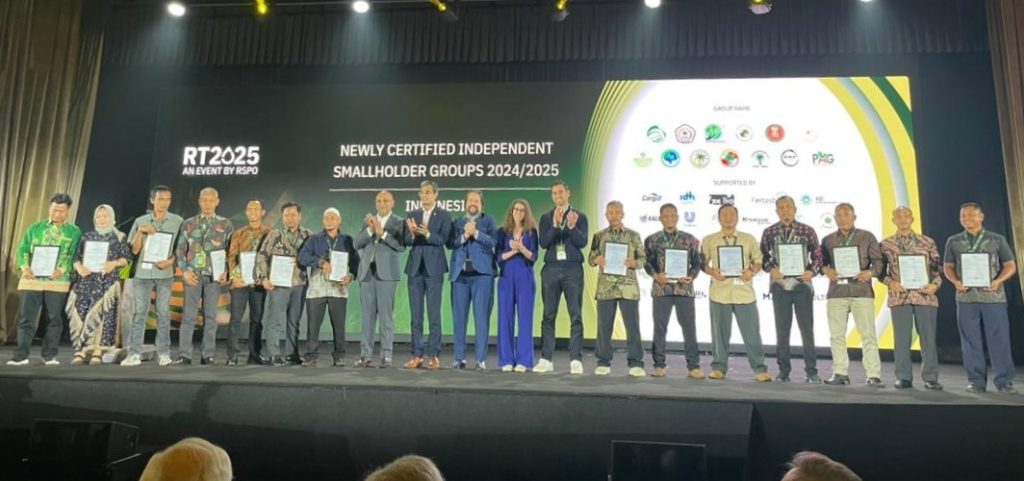
Key Reflections and Outcomes
By the close of RT2025, three themes crystallised as the foundation for the industry’s next chapter:
- Trust must be earned through transparency, not assumed through certification alone.
- Technology must move from pilots to practice, embedding digital tools and biotechnology across the entire value chain.
- Transformation must be collective, aligning governments, corporations, smallholders, and consumers through equitable incentives and data-driven governance.
The sessions also produced immediate outcomes and commitments:
- Expansion of RSPO’s PRISMA digital data system for traceability and compliance.
- Initiation of an RSPO Innovation Office to bridge partnerships between tech startups and producers.
- Growing adoption of smallholder premiums via ISH credits.
- Renewed collaboration plans between Malaysia, Indonesia, and consumer markets to align EUDR compliance efforts.
As the delegates departed, the sentiment was clear: palm oil’s future is not pre-written, it is being redesigned in real time.
In the words of one closing remark from a participant, “Sustainability is no longer about defending palm oil. It’s about demonstrating what the world can learn from it.”
#RSPO #SustainablePalmOil #RT2025 #PalmOil #SustainableAgriculture #PalmOilMalaysia #Agrirecoded