Beyond Cost: Why Plantation Valuation Should Reflect Future Value, Not Just Past Investment
28/07/2026
Palm Oil Long-Term Price Predictions: Its Past, Present, and Future in Feeding the World
28/07/2026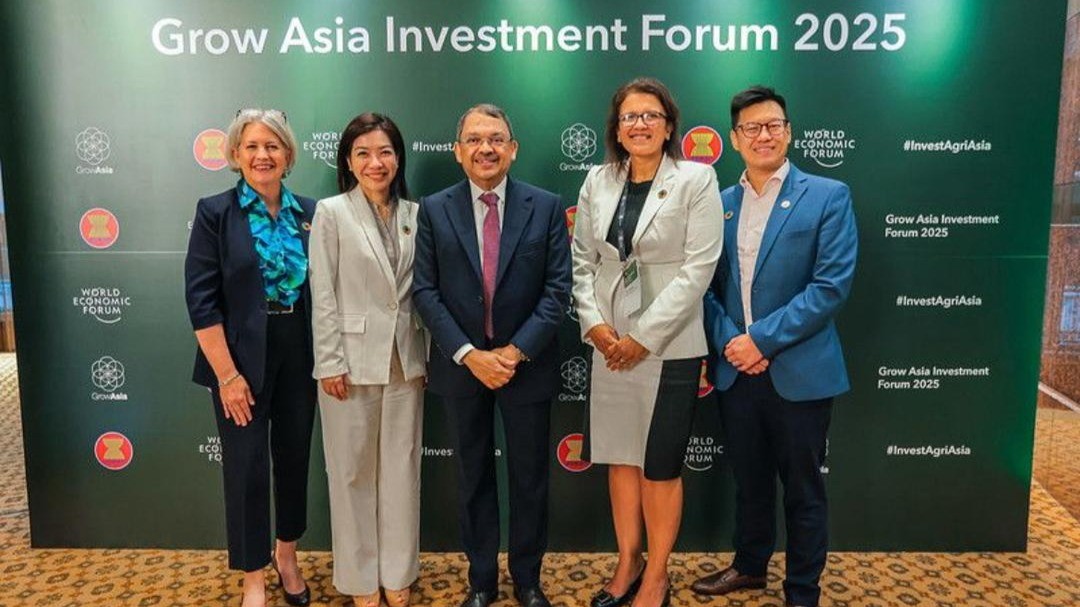
Exciting insights from the Grow Asia Investment Forum 2025!
Leading minds from industry, government, finance, and philanthropy came together to share insights on capital and drive innovation for Asia’s Agri-Food future.
Featured speakers included:
- Franky Widjaja (Sinar Mas) – Pioneered investment in regenerative agroforestry and ecosystem services for climate resilience.
- Dr Kao Kim Hourn (ASEAN) – Shared the ASEAN vision for collaborative, nature-positive food systems and integrated policy frameworks.
- Sunny Verghese (Olam) – Spotlighted the “Eight Critical Gaps” in global food systems: food, land, GHG, biodiversity, food loss/waste, water, livelihood, and innovation gaps.
- Sebastian Buckup (World Economic Forum) – Advocated for public-private partnerships to scale system-wide impact.
- Beverley Postma (Grow Asia) – Reflected on a decade of partnership and the importance of inclusive innovation for ASEAN’s smallholders and youth.
- Dawn Chan (Temasek Trust), Saahil Parekh (Rockefeller Foundation), Esther Van de Voort (Yara), Surita Sandosham (Heifer International), and more, each sharing impactful approaches on investment, technology, and inclusion.
Core topics discussed at the event:
- Regenerative agro-forestry finance and valuing natural capital.
- Driving gender-inclusive and youth-powered investment strategies.
- Scaling AgriTech innovation and climate-smart tools for smallholders.
- Blended finance and public-private-philanthropic capital for food, climate, and nature outcomes.
- First Movers Coalition for Food: aggregating demand for net-zero agricultural transformation.
Key Learnings and Takeaways we saw:
- Systemic challenges such as production gaps, emissions, biodiversity loss, and food waste are intensifying: Global food demand is projected to rise 56% by 2050, yet 33% of all food produced is still lost or wasted annually, costing over $1 trillion. In Southeast Asia, 70% of survey respondents reported some level of food insecurity in 2024, up from 60% in 2020, reflecting growing fragility in supply and affordability[1][2].
- Women and youth remain underserved in agri-food systems: Only about 20% of landholders in Asia-Pacific are women, though women account for nearly half of the agricultural labour force. Youth engagement lags as the rural population ages—ASEAN’s average farmer age exceeds 50—threatening sector renewal and innovation[3][4].
- Digital AgriTech and blended finance are making inroads but require scaling: Over 3.7 million smallholders across five ASEAN countries have been connected to digital resources and financial solutions via initiatives like Grow Asia, resulting in US$81 million in higher farm incomes annually within select value chains. Yet, only a fraction (~10% in some markets) of smallholders have consistent access to high-quality digital advisory and financial products, and successful blended finance projects still represent a small share of total investment needs [3][5].
- Regional and global innovation, such as pooled demand signals and new finance mechanisms, is catalysing transformation: The First Movers Coalition for Food unites over 50 organisations with US$900 billion in annual revenues to scale markets for low-emission rice, dairy, beef, and row crops. Market-based instruments, such as biodiversity and carbon credits, are being piloted across ASEAN but require more robust frameworks to drive widespread adoption and financing [3].
- Public-private collaboration and actionable policies are essential: More than 775 partners, including governments, industry leaders, and producer organisations, are now engaged in collaborative platforms like Grow Asia. Regional strategies now emphasise traceability, climate-smart practices, and inclusive finance—supported by new funding, such as the Asian Development Bank’s planned US$26 billion in additional agriculture support from 2025-2030[6][3].
Data Trends for Critical Gaps
- Food Gap: +56% production needed by 2050 to feed 10 billion people[2].
- Land Gap: Meeting this demand would require 593 million hectares of new farmland—twice India’s land area[3].
- GHG Mitigation Gap: Agriculture emits ~25% of global greenhouse gases; urgent emissions reduction is required[3][2].
- Biodiversity Gap: Over 90% of global calories come from just 15 crops—nine dominate global food production—exacerbating species and pollinator extinction risks[3][2].
- Food Loss & Waste Gap: 33% of food produced is lost/wasted annually, causing over $1 trillion in economic damage[1][2].
- Water Gap: Asia’s water demand is expected to rise by 55% by 2050; several ASEAN river basins now face chronic stress, complicating irrigation and crop resilience[5][6].
- Livelihood Gap: Smallholder farmers make up almost 90% of the world’s farms but often earn below living income thresholds, even as their productivity and income is rising in some segments via digital and training access[7][3].
- Innovation Gap: Incremental progress is stalling; sector-wide transformation is needed, especially in digital adoption (less than 15% digital penetration among ASEAN’s small food producers)[5][4].
These data points underscore the urgency and interconnectedness of the region’s agri-food system challenges, highlighting why systemic innovation, cross-sector partnership, and bold finance are central to achieving food security and sustainability in Asia[3][1][2][5][6][7][4].
Sources
- [1] Grow Asia Kicks Off 2025 with Strategic Council Meetings … https://www.growasia.org/post/grow-asia-kicks-off-2025-with-strategic-council-meetings-focused-on-financing-resilience-and-colla
- [2] OECD-FAO Agricultural Outlook 2025-2034: Emerging … https://www.fao.org/newsroom/detail/oecd-fao-agricultural-outlook-2025-2034–emerging-economies-will-drive-growth-in-animal-source-food-consumption-and-production/en
- [3] How to build more robust, sustainable food systems in Asia https://www.weforum.org/stories/2025/09/asia-s-agri-food-transformation/
- [4] The Post-2025 ASEAN Agrifood Landscape: What Next? https://rsis.edu.sg/rsis-publication/rsis/the-post-2025-asean-agrifood-landscape-what-next/
- [5] How Grow Asia advances sustainable and resilient food … https://www.edb.gov.sg/en/business-insights/insights/how-grow-asia-advances-sustainable-and-resilient-food-systems-in-southeast-asia-from-its-hub-in-singapore.html
- [6] Agriculture and Food Security in Asia and the Pacific https://www.adb.org/what-we-do/topics/agriculture
- [7] Agricultural Productivity & Incomes of Small Scale Producers https://indicators.report/agricultural-productivity-incomes-of-small-scale-producers/
#PalmoilPlantation #PalmOil #FoodSecurity #Agriculture #SustainableAgriculture #SustainableFarming #AgriRecoded
Related posts

28/07/2026